
Usually, when a bed is placed in front of a window, it’s because that was well, the only logical option. And while it’s usually not the most ideal placement because it can cause some headboard limitations, window treatment trickiness, etc., it doesn’t mean it can’t look awesome. Actually, I am currently helping two dear friends put together their new room, and placing the bed in front of the window was our only choice. This means I have been thinking about this whole “bed in front of a window” topic A TON, and figured I might as well put it to use and write a whole post about the things to think about and some general rules of thumb.
I broke it down into different types of window situations – a standard window, a floor-to-ceiling window, an off-centered window, flanking windows that are too close together, and finally, an elevated height window. Let’s get into it.
The “Standard” Height Window
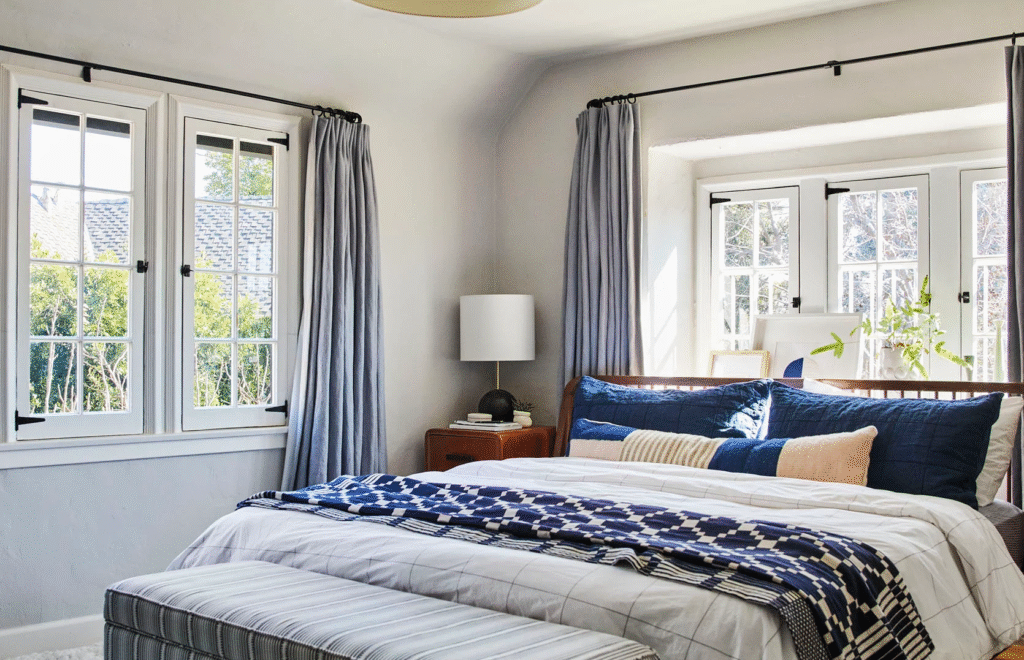
“Standard” is likely is subjective term with new build codes vs older homes that are all different, but it’s a window that has a decent amount of wall above and below it (but is too low for a headboard to sit under it), sits in the center of the wall, and requires you to really think about the height of your headboard to make sure you don’t block all of your precious light.
What Emily did in her old LA primary bedroom was pretty perfect. She chose a low spindle bed, which lets all the pretty light through (and as you know, she wants ALL the pretty light, all the time). But if you want an upholstered bedframe, that’s ok too! But here’s our rules of thumb for this situation:
- Don’t cover more than the bottom third of the window, even better if it only blocks the bottom quarter.
- The standard height for the low headboard is 14 to 24 inches, measuring from the top of the mattress.
Of course, every window is different, so the ideal measurements will likely vary for each of you. Another thing to consider is if your window doesn’t actually bring in a ton of light, like in my friend’s place. We went a little higher (covering about a third of the window) since there’s not a ton of light that comes in, and they want it to feel really cozy and almost cave-like. It’s your home, so design it to work for how you want to really live!
The Floor-to-Ceiling Window

Tall ceilings with tall windows obviously give you some more headboard height flexibility. However, with big windows like that, they are naturally the center of attention! So you also probably don’t want to block a ton of it with a really tall headboard. I would still consider keeping the headboard height to the bottom third. It will make your room feel taller, too.
The Off-Center Window
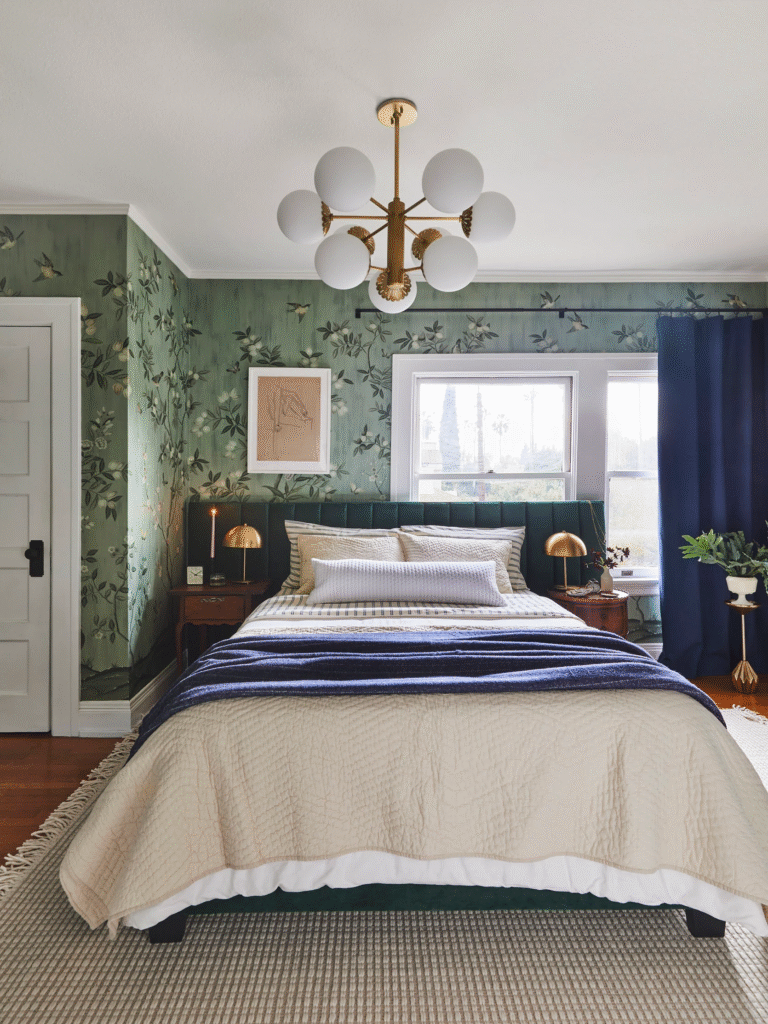
The dreaded off-center window. Why not make designing a little more challenging, right? I actually had the pleasure of designing the bedroom above for my other friends/neighbors, and the off-center window was tricky to deal with. If you look, the windows are fairly low to the ground, so covering at least part of the window was unavoidable. But what worked about this setup was that the headboard only blocked the bottom third, and since we had a double window situation, the second window let in a lot more light. Had it just been that single window behind the bed, I would have chosen a lower headboard since they loved all the natural light.
The Slightly Elevated Window
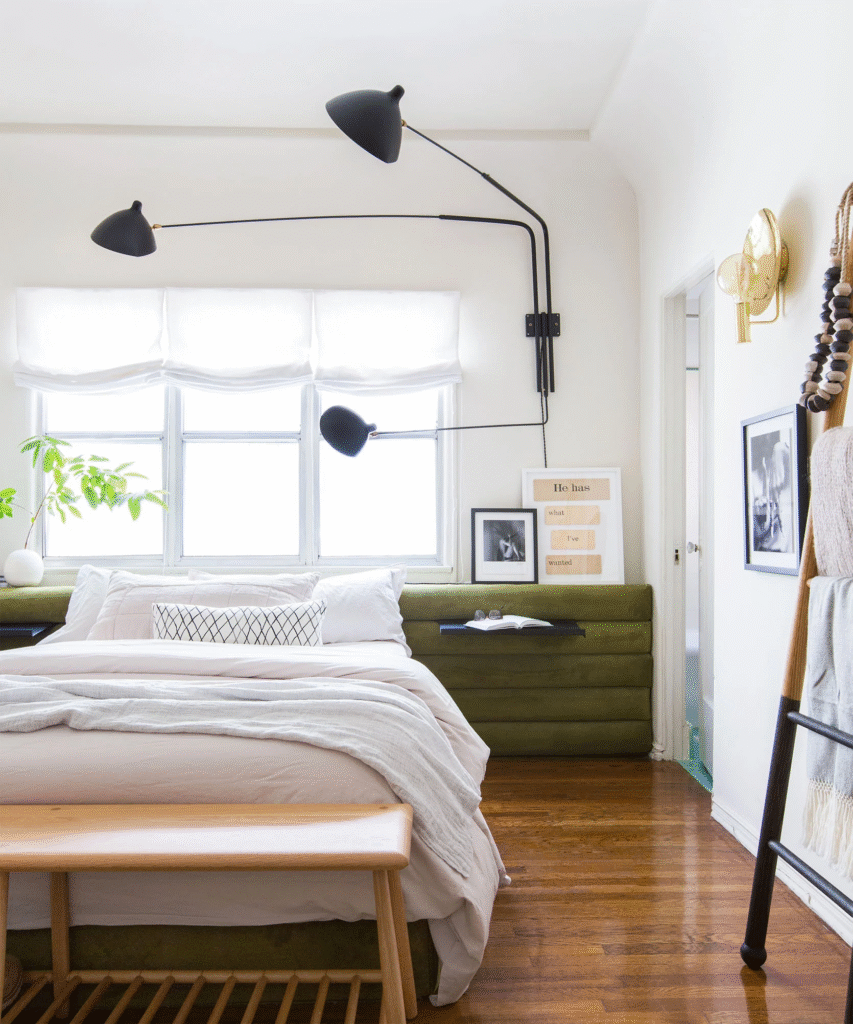
Lastly, we have the “high off the ground” window. This can be the best of all the situations because you might not need to block your window at all.
Something to consider, though, are your window treatments with this kind of look. A Roman shade is likely the move. Given where his bathroom door is, he couldn’t have brought his bed forward enough for drapes. It’s perfect as is, but it’s also a reminder that a pretty roman shade is a great option when beds are in front of windows.
Hope this makes you even excited to have to put your bed in front of a window.