
Welcome to another installment in my unofficial guide to non-cookie-cutter design. My first take explored the beauty of ethnic textiles, global and ethnic design; my second, a plea for designing for whimsy rather than chicness.
Today, we’re diving into a topic that I lightly touched on earlier this year, in a team shopping post about what we were on the hunt for in our homes in 2025: folk art. In it, I explained that I would love to stumble upon a Scandinavian hand-painted folk art dresser or chest for my daughter’s bedroom, as she absolutely adores the “Frozen” movies. When I was first introduced to Anna and Elsa a decade ago, I didn’t even notice all the gorgeous painted scrollwork and florals adorning millwork, doors, walls, and textiles. But after seeing the films enough to have them imprinted in my veins, it’s what I enjoy most about the visuals.
Then, as if tapped into my soul, Caitlin wrote a piece on a Scandinavian folk art furniture trend she was noticing. That article has been tucked away in my mind since she published it, and I had the itch to expand on the topic. But I’m not just stopping at Swedish or Norwegian folk art; there is a wide world of it to know more about and admire. Let’s go.
What Exactly Is Folk Art?
To establish what we’re talking about here, folk art and folk craft are amateur art made by the people, for the people. It’s how most cultures over time have kept their traditions, lore, and people alive. It’s a visual art that was predominantly utilitarian or affixed to functional items, most often done by hand or with limited means. Folk art tells the stories of people and their beliefs across time, and honestly, that alone is so beautiful to me. It’s often colorful, geometric, or full of interesting figures and animals.
While folk art can touch all areas of life, like with music and practical art, we’re here to talk about the home, after all. Quilts, tapestries, ceramics, wall hangings, embroidery, sculptures, framed art, and furniture made or crafted by common folk (i.e., not trained artists for the means of selling for profit) are all examples of folk art—hence the name.
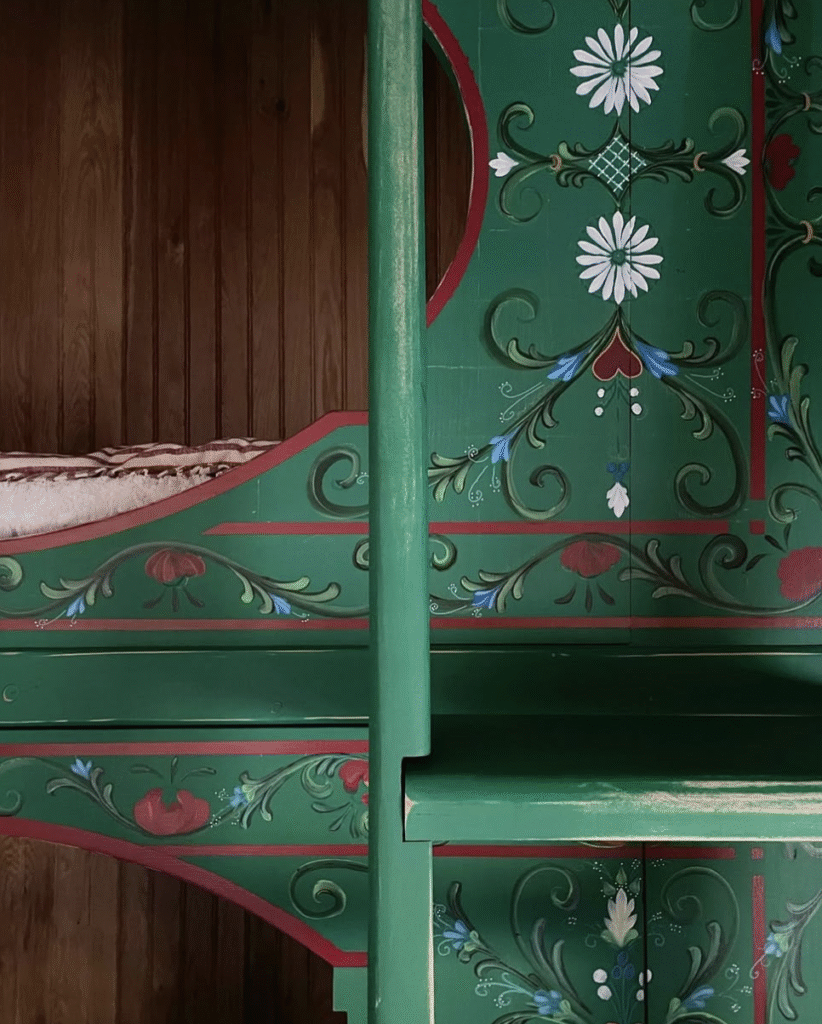
In my mind, it’s kind of like the original DIY of the decorative arts. And appropriately, there’s been a boom of folk-art style hand-painted creations at the hands of design DIYers and artists. While I do love the look of it, it’s important to note that a lot of the modern-day folk art we’re seeing lacks the cultural significance at the heart of it. It’s more aesthetic-forward than anything else. That’s not to say I would feel a way about implementing some Nordic folk art motifs in the room of my Afro-Caribbean daughter, but it does make me want to do some research on the traditional art styles of both my and my husband’s heritage.
I could wax poetic about this until everyone is bored, so let’s keep it moving, as there is a lot to talk through (plus some shopping!). First, beautiful inspirations and aspirations.
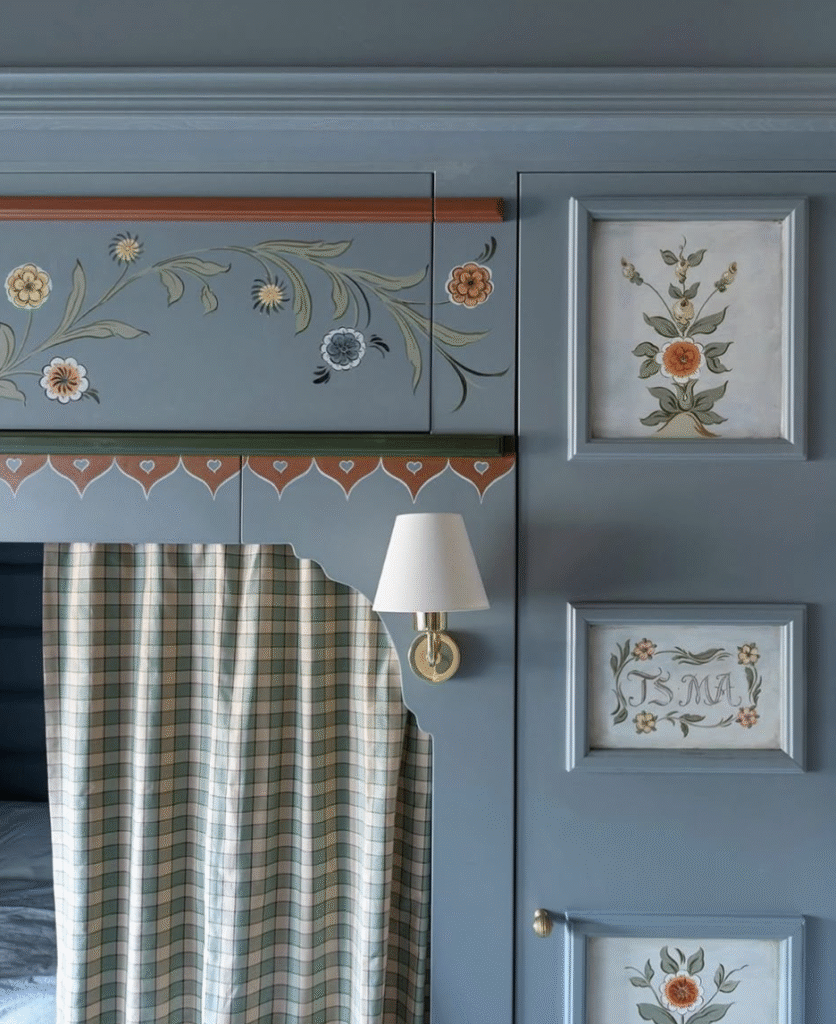
It’s impossible to fully encompass the whole of folk art across the globe, but hopefully I gave you at least a taste of something that might strike your fancy. Enough to do your own deep dive or jump-start a hunt for a piece for your home.