
We’ve all walked into a room that felt “off.” Maybe it was the harsh, medicinal glare of a single overhead bulb, or a corner so dark it felt cavernous and cold. On the flip side, we’ve all walked into spaces that immediately made us want to kick off our shoes and stay awhile.
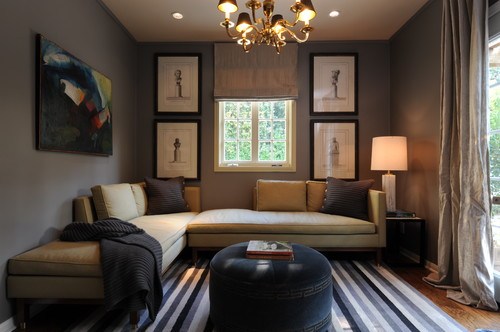
What is the invisible force shifting that mood? Lighting layers.
When it comes to interior design, lighting is often the most underrated element. Yet, it is the primary bridge between a “house” (a structure of walls and floors) and a “home” (a sanctuary of warmth and personality). Here is how to use the three layers of lighting to transform your living space.
1. Ambient Lighting: The Foundation
Ambient lighting is your base coat. It’s the general illumination that allows you to move safely through a room without tripping over the coffee table. In a standard house, this is usually just a “boob light” in the center of the ceiling. In a home, ambient lighting is soft and intentional.
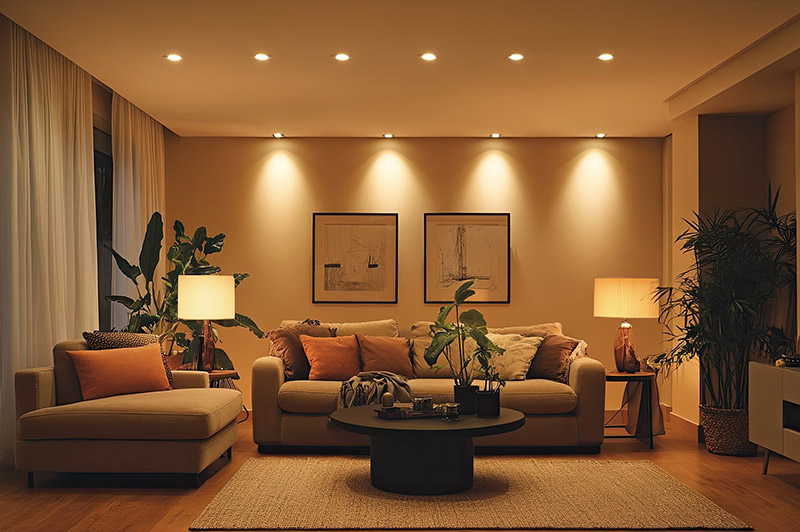
- How to elevate it: Instead of relying on one high-wattage source, use recessed cans with dimmers, or a large, statement chandelier. The goal is to mimic natural daylight—enough to see, but not so much that it feels like a retail store.
- The Home Touch: Always, always install dimmer switches. Being able to dial down the brightness as the sun sets is the easiest way to signal to your brain that it’s time to relax.
2. Task Lighting: The Function
A house is a place where you exist; a home is a place where you live. You cook, you read, you work, and you create. Task lighting is specific, directional light that helps you perform these activities without eye strain.
- Where it goes: Think under-cabinet LEDs in the kitchen so you can actually see what you’re chopping, a sleek brass floor lamp over your favorite reading chair, or adjustable sconces flanking the bathroom mirror to eliminate shadows while you get ready.
- The Home Touch: Choose task lighting that doubles as decor. A beautiful desk lamp isn’t just a tool; it’s a piece of sculpture that defines your workspace.
3. Accent Lighting: The Soul
This is where the magic happens. Accent lighting is the “jewelry” of the room. It isn’t about seeing where you’re going; it’s about showing off what you love. This is the layer that adds depth, drama, and character.
- How to use it: Use picture lights to illuminate a gallery wall, LED strips tucked into bookshelves to create a glow, or “uplights” placed behind a large floor plant to cast beautiful shadows on the ceiling.
- The Home Touch: Accent lighting draws the eye to your personal history. By highlighting your favorite art or a collection of travel mementos, you are telling the story of who lives there.
Why the Layers Matter
If you only have ambient light, your home feels flat and clinical. If you only have task light, it feels chaotic. But when you layer all three, you create texture.
The difference between a house and a home is found in the atmosphere. A home feels curated, cozy, and flexible. By layering your lighting, you gain the power to change the mood of a room at the flick of a switch—turning a functional daytime kitchen into an intimate evening bistro.
Pro-Tip: The “Golden Hour” Rule
To truly make your space feel like a home, aim for a “warm” color temperature (around 2700K to 3000K). Avoid “cool white” bulbs, which can feel institutional. You want your home to glow with the warmth of a sunset, not the buzz of an office cubicle.
Ready to transform your space? Start by turning off the big overhead light tonight and turning on a few lamps instead. You’ll feel the difference immediately.