
Purchasing an iconic piece of Washington, D.C. history is a dream for many homeowners. Whether it is an 1890s brick rowhouse in Georgetown, a stately Victorian in Capitol Hill, or a stone-front property in Old Town Alexandria, these homes possess an architectural soul, historic millwork, and a sense of permanence that modern builds simply cannot replicate.
However, that historic charm comes with a unique set of responsibilities. D.C. is home to some of the strictest historic preservation guidelines in the nation, primarily managed by the Historic Preservation Review Board (HPRB) and local Advisory Neighborhood Commissions (ANCs).
For many homeowners, the prospect of updating these properties triggers an immediate wave of anxiety. Can I have a chef’s kitchen? Am I allowed to update the primary bathroom? Will the city let me fix the drafty windows?
The answer is a resounding yes. True luxury design doesn’t mean erasing history—it means honoring the past while seamlessly integrating 21st-century comfort, technology, and functionality. Here is how our design firm expertly navigates historic preservation to deliver uncompromising modern luxury.
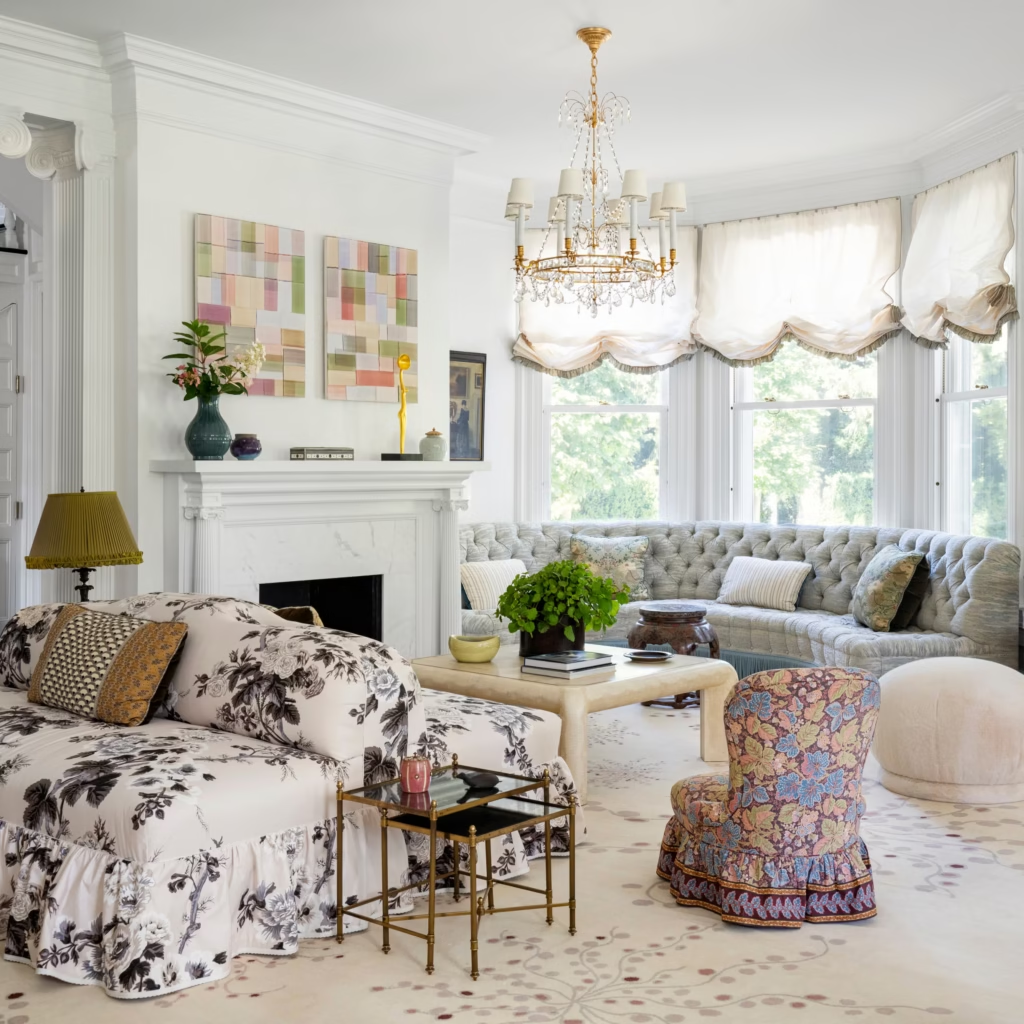
1. Demystifying the Guidelines: Inside vs. Outside
The single most important fact that surprises historic homeowners is where the city’s jurisdiction actually stops.
The Golden Rule of Historic Preservation:
In almost all of D.C.’s historic districts, preservation guidelines apply strictly to the exterior of the property that is visible from the public right-of-way (the street).
This means that while you cannot alter the front brick facade, remove original iron stairs, or replace historic wood windows with cheap vinyl alternatives, the interior of your home is essentially your canvas. You are entirely permitted to create an ultra-modern kitchen, install smart automation, and redesign bathrooms to resemble five-star luxury spas, provided the structural integrity of the building is maintained.
2. Navigating the HPRB: The Secret is Collaboration, Not Confrontation
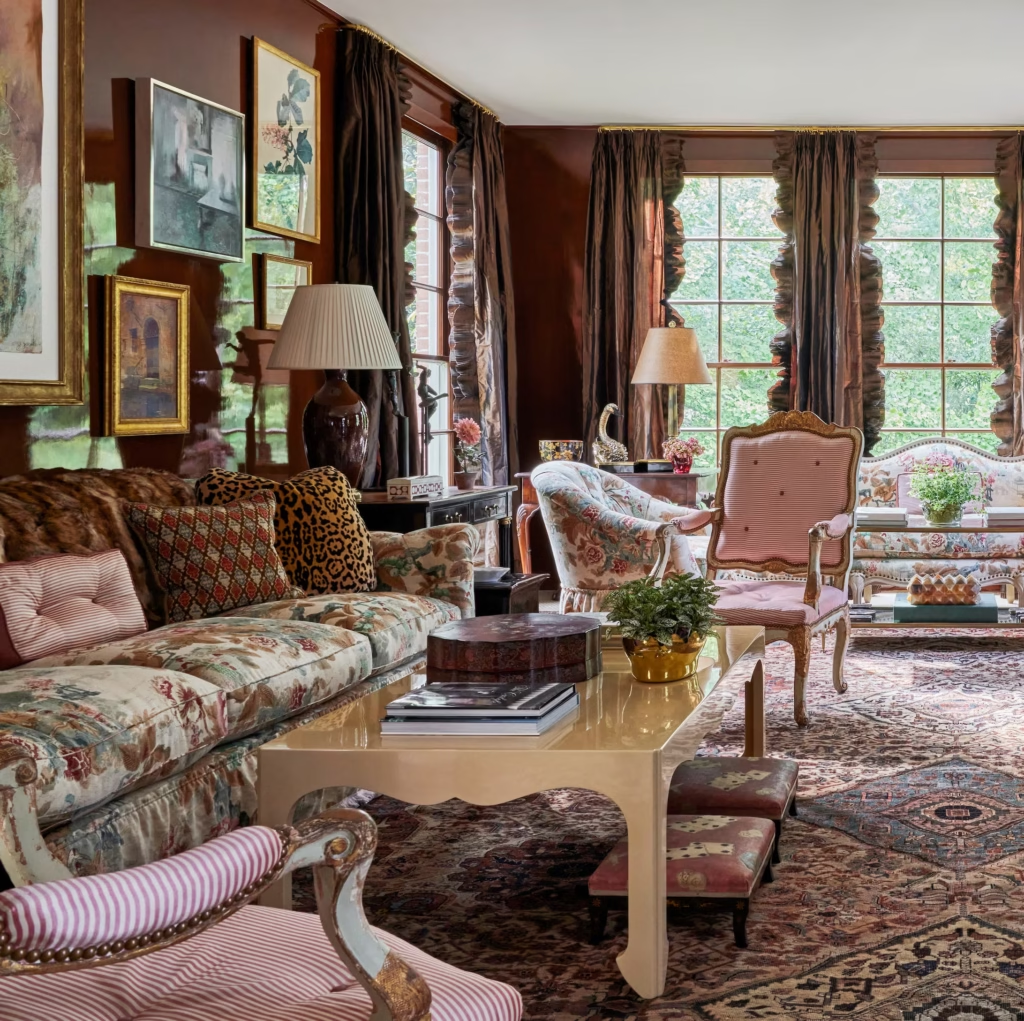
When an exterior update is necessary—such as restoring a deteriorating roof, adding a rear addition, or installing custom window treatments to combat the blistering July heat—the approval process can feel daunting.
Our studio approaches the HPRB and local ANCs as partners rather than obstacles. The secret to smooth approval lies in flawless documentation:
- Historic Accuracy: We source historical photographs and original building permits from the D.C. Archives to ensure any exterior restoration perfectly mimics the original craftsmanship.
- Material Integrity: If historic wood windows must be replaced due to rot, we specify custom-crafted, double-hung wood windows that match the historic profile exactly, while offering modern insulation and UV-blocking glass to protect your interior.
- Rear Freedom: D.C. guidelines are significantly more flexible regarding the rear of a home if it isn’t visible from the main street. This is often where we design grand, modern glass glass doors that open up to private courtyards, bridging the gap between historic structure and modern indoor-outdoor living.
3. Integrating Modern Infrastructure Discreetly
The real luxury of a modern home is invisible: central air conditioning, multi-room audio, automated lighting, and robust Wi-Fi. But running these systems through 130-year-old plaster walls and solid brick foundations requires master-level design precision.
- The AC Dilemma: Historic homes rarely have space for bulky HVAC ductwork. Instead of lowering original 10-foot ceilings to hide ducts, we design high-velocity mini-duct systems or seamlessly integrate slim, architectural linear diffusers into custom crown molding.
- Smart Home Discretion: We swap out cluttered banks of plastic light switches for single, elegant solid-brass keypads that flush-mount into the walls, letting you control lighting, shades, and climate from a single sleek interface that feels timeless.
4. The Material Bridge: Pairing Eras Intentionally
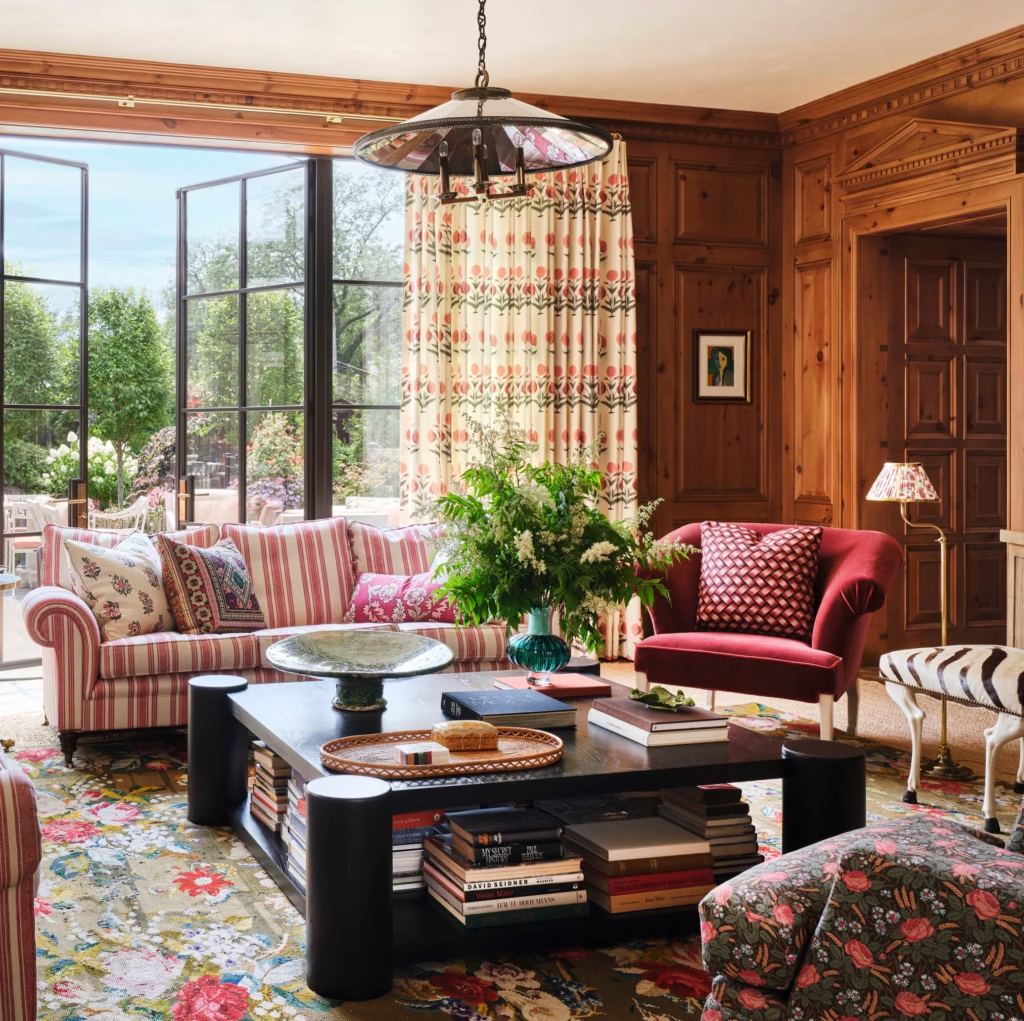
When designing the interior layout, the most successful projects don’t try to fake history. Trying to build a “brand new antique kitchen” often looks artificial. Instead, celebrate the contrast between the old and the new.
| The Restored Historic Element | The Modern Luxury Counterpart | The Visual Result |
| Exposed, hand-laid brick walls | High-gloss European flat-panel cabinetry | The sleek, reflective modern cabinets stand out beautifully against the rough, organic texture of the historic brick. |
| Original heart-pine flooring | Minimalist, low-profile Italian furniture | Clean furniture lines allow the rich, swirling grain patterns of the centuries-old wood floors to act as the primary artwork. |
| Intricate, hand-carved plaster crown molding | A bold, architectural minimalist lighting sculpture | The modern fixture acts as a striking focal point, casting light upward to illuminate and celebrate the historic plaster details. |
5. Designing the Modern Chef’s Kitchen
The kitchen was historically a utility space tucked away at the back of a D.C. rowhouse. Today, it is the center of the home.
To bring modern luxury into a historic footprint, we frequently remove non-load-bearing interior partition walls to create an open-concept flow from the front parlor straight through to the dining space and kitchen. We pair state-of-the-art, panel-ready appliances (refrigerators and dishwashers masked behind custom cabinetry panels) with deeply veined marble or quartz slab backsplashes. The result is a high-performance culinary space that feels completely organic to the home’s updated floor plan.
Ready to Write Your Home’s Next Chapter?
Living in a historic D.C. neighborhood is a privilege, and renovating a historic home is an art form. You do not have to choose between preserving the District’s architectural legacy and enjoying the heights of modern luxury. With the right design team navigating the local guidelines, you can seamlessly have both.
If you are planning to renovate a historic property in the DMV area and want an experienced partner to guide you through both the design and the preservation approval process, reach out to our studio today to schedule an initial consultation.