
In Washington, D.C., the most breathtaking interiors aren’t always in homes—they’re in the museums we visit on the weekends. From the soaring neoclassicism of the National Building Museum to the mid-century serenity of The Kreeger, the city is a masterclass in spatial design.
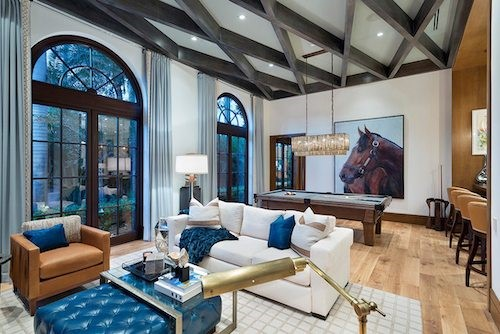
If you are looking for a high-concept refresh this February, here is how to translate the grandeur of D.C.’s cultural institutions into your own living room.
1. Scale and “Grand Narrative” from the National Building Museum
The National Building Museum’s Great Hall is famous for its colossal Corinthian columns and sense of awe. While you likely don’t have 75-foot ceilings, you can borrow its lessons on visual weight and architectural storytelling.
- The Lesson: Emphasize Verticality. Use floor-to-ceiling drapery or tall, narrow bookshelves to draw the eye upward, mimicking the “reach” of the NBM’s columns.
- The Material: Terracotta and Exposed Brick. The museum celebrates the beauty of raw building materials. In 2026, we’re seeing a return to these “honest” materials—think unglazed ceramic lamps or a limewashed accent wall that adds texture and history.
2. Light and Serenity from The Kreeger Museum
Designed by Philip Johnson, The Kreeger was originally a private residence, making it the perfect bridge for home inspiration. It is defined by its use of Travertine limestone and natural light.
- The Lesson: The Power of Natural Neutrals. The Kreeger uses a monochromatic palette of stone and light oak to let the art do the talking. You can achieve this “museum-quiet” feel by layering different textures of the same neutral shade (creams, sands, and pales).
- The Material: Travertine and Glass. Swap a wooden coffee table for a travertine plinth or a glass-topped table to create a sense of “transparency” and light flow, a hallmark of Johnson’s “International Style.”
3. Immersive Color from The Renwick Gallery
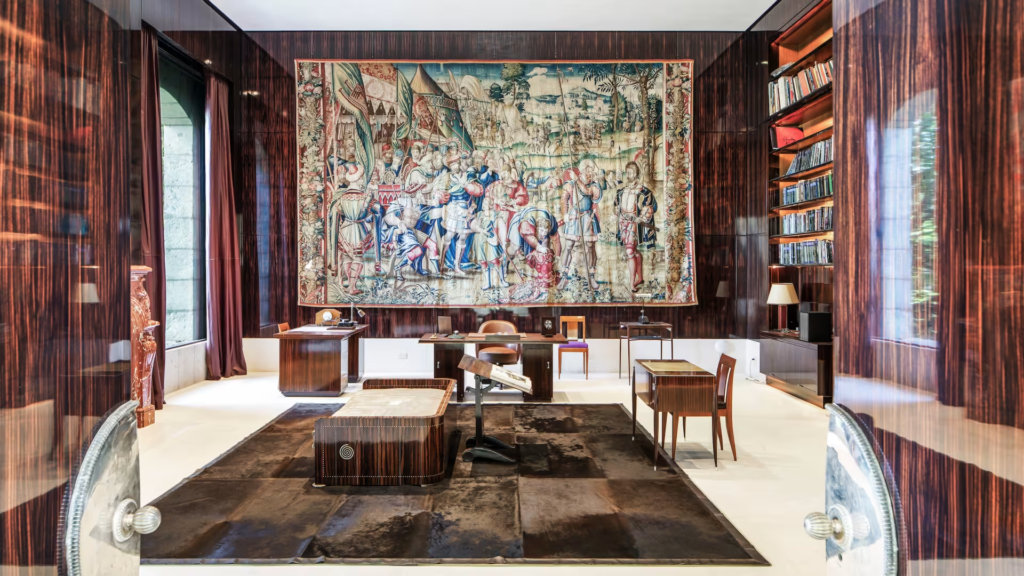
The Renwick is the “Jewel Box” of the Smithsonian, known for its bold, immersive installations (like the famous “Wonder” exhibition). It teaches us that a room shouldn’t just be a place you sit—it should be an experience.
- The Lesson: Drench the Space. The Renwick often features rooms painted in a single, saturated color from floor to ceiling (including the trim). This “color drenching” creates an intimate, cocoon-like feeling that is perfect for a D.C. library or bedroom.
- The Material: Statement Textiles and “Craft.” The Renwick celebrates the handmade. Incorporate one high-impact “craft” piece—a hand-woven tapestry, a sculptural light fixture, or an oversized ceramic vessel—to act as the “exhibit” of the room.
Bringing it Home: Your February Curation
To live in a “Museum-Inspired” home, you must act like a curator, not a collector.
- The “Visible Vault”: Take a cue from the NBM’s open storage. Group your favorite objects by material (all glass, all brass, all white ceramic) on a single shelf to give them a sense of “collection” rather than clutter.
- Pedestal Styling: Elevate a simple plant or a favorite book by placing it on a small pedestal or a stack of oversized art books. Elevating an object gives it “importance.”
- The “Gallery Walk”: Ensure your hallways have dedicated “accent lighting” (even simple battery-operated picture lights) to turn a transit space into a curated journey.