
The Victorian era, spanning Queen Victoria’s reign from 1837 to 1901, was a period of immense change, industrialization, and artistic flourishing. In interior design, this translated into a style characterized by opulence, intricate details, and a celebration of material wealth and technological advancements. Far from being dated, Victorian Style in Interior Design offers a timeless appeal for those who appreciate grandeur, romance, and a sense of history.
If you’re drawn to rich textures, elaborate furnishings, and spaces that feel lived-in and deeply personal, then the Victorian aesthetic might be your perfect inspiration.
The Hallmarks of Victorian Design
Victorian interiors are anything but minimalist. They revel in abundance, layering, and a rich tapestry of influences. Here are the defining characteristics:
1. Rich, Deep Color Palettes
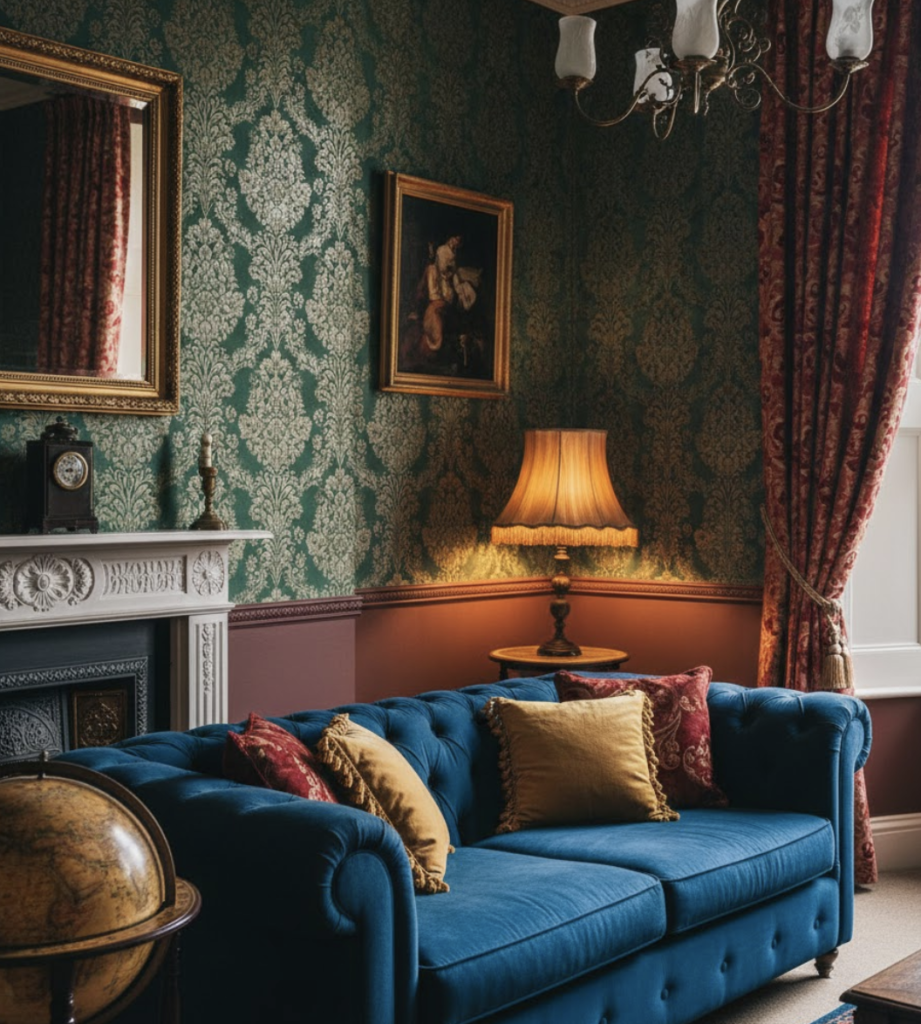
Victorian homes often embraced dark, saturated hues that conveyed warmth and luxury.
- Gem Tones: Deep reds (think claret and burgundy), emerald greens, sapphire blues, and rich purples were incredibly popular.
- Earthy Tones: Golds, deep browns, ochres, and olive greens were also frequently used, often paired with the brighter jewel tones.
- Patterned Wallpaper: Ornate wallpapers featuring damask, floral motifs, birds, and intricate geometric patterns were ubiquitous, often in flocked or embossed finishes.
2. Ornate Furniture & Carved Wood
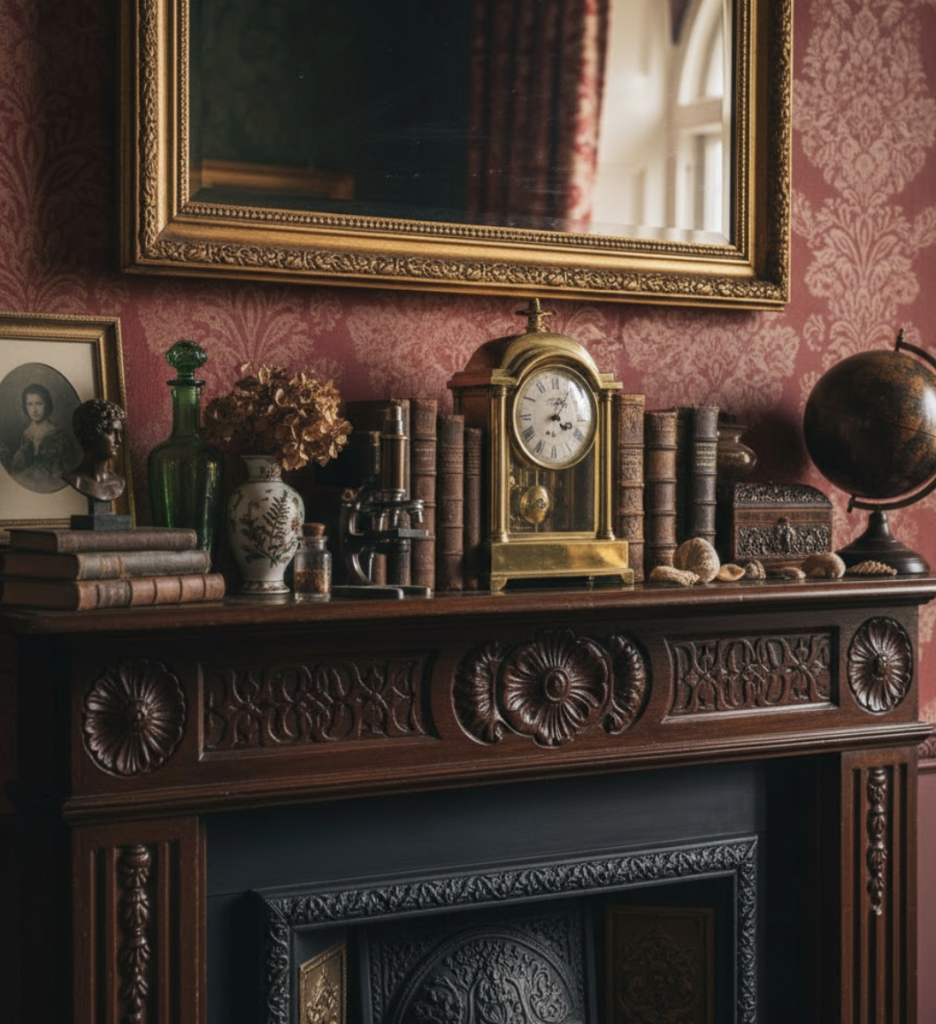
Furniture during the Victorian era was heavy, solid, and often elaborately carved, reflecting a desire for substantial pieces.
- Dark Woods: Mahogany, walnut, oak, and rosewood were preferred.
- Intricate Carvings: Detailed carvings, often featuring floral motifs, scrolls, or mythological figures, adorned everything from chair legs to cabinet doors.
- Upholstery: Deep button tufting, fringing, and elaborate trim were common on sofas, armchairs, and ottomans, often in velvet, damask, or brocade.
3. Lavish Textiles & Window Treatments
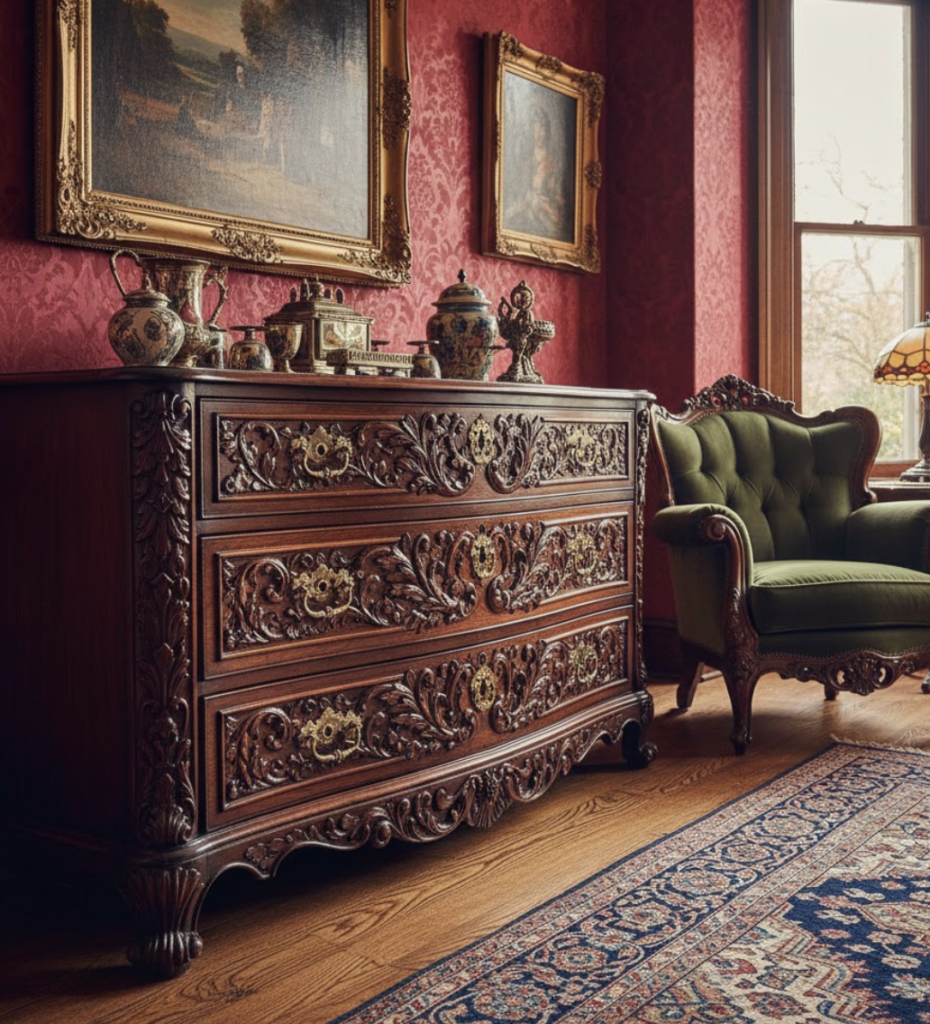
Layers were key to creating a sense of warmth, privacy, and grandeur.
- Heavy Drapes: Windows were often adorned with multiple layers of opulent fabric, including velvet, silk, or brocade, often with heavy tassels, fringes, and pelmets.
- Lace Curtains: Sheer lace curtains were popular for privacy while still allowing natural light.
- Rich Carpets: Wall-to-wall carpeting or large, intricately patterned Oriental rugs covered most floor surfaces, adding to the room’s luxurious feel and insulating against cold.
4. Abundant Accessories & Curiosities
Victorians were avid collectors, and their homes reflected this with a profusion of decorative objects.
- Art & Mirrors: Gilt-framed oil paintings, portraits, and large, ornate mirrors were common.
- Fireside Accessories: Cast-iron grates, polished fire tools, and decorative mantelpieces with elaborate overmantels.
- Display Cabinets: Curio cabinets and display cases filled with porcelain figurines, glass objets d’art, travel souvenirs, and scientific instruments.
- Lamps: Ornate lamps with fringed shades provided soft, atmospheric lighting.
- Indoor Plants: The “fern craze” meant potted plants were often found throughout the home.
Bringing Victorian Style into Modern Homes
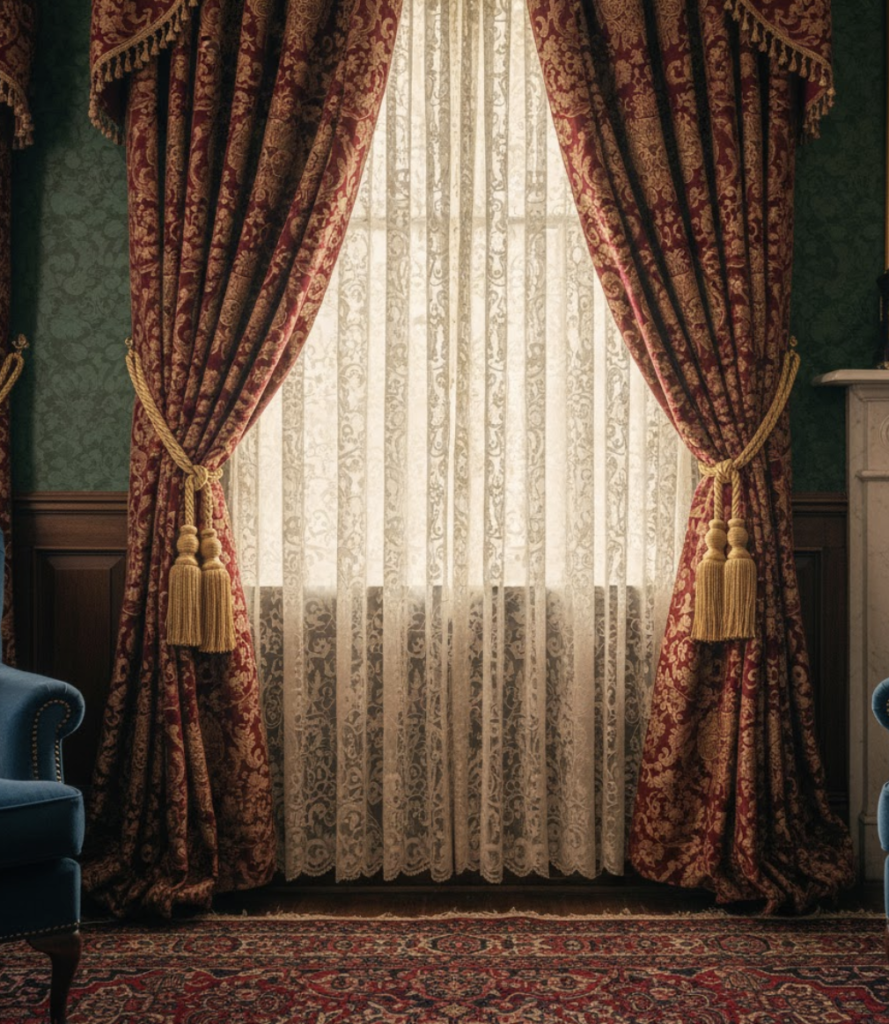
You don’t need a sprawling Victorian mansion to infuse your home with this classic style. Here’s how to adapt it for today:
- Focus on a Few Key Elements: Instead of going full maximalist, choose one or two strong Victorian features, like a deep jewel-toned velvet sofa or a wall covered in an elegant damask wallpaper.
- Mix with Modern: Pair a beautifully carved Victorian dresser with a sleek, contemporary lamp to create an interesting contrast.
- Statement Lighting: Invest in an ornate chandelier or a fringed table lamp to add instant Victorian charm.
- Curated Collections: Display your own personal collections (books, art, photographs) in a thoughtful, “cabinet of curiosities” style.
- Rich Textiles: Layer velvet cushions, brocade throws, and a large, patterned rug to introduce softness and luxury.
- Architectural Details: If possible, highlight or add architectural details like crown molding, deep baseboards, or a decorative fireplace mantel.
Victorian interior design is an invitation to indulge in elegance, history, and personality. It’s a style that speaks to a love of craftsmanship, storytelling, and creating a home that feels warm, inviting, and truly unique. If you need help to make this a reality, contact us.