
In the world of interior design, paint has always been the most cost-effective way to transform a room. But as we move through 2026, the trend has shifted from what color you use to where you apply the pigment. The traditional “white ceiling and white trim” rule is officially a thing of the past.
Today, we are seeing two dominant, high-impact strategies: Color Drenching and Color Capping. Both are sophisticated, both are bold, but they serve entirely different emotional and architectural purposes.
Here is how to decide which one belongs in your home.
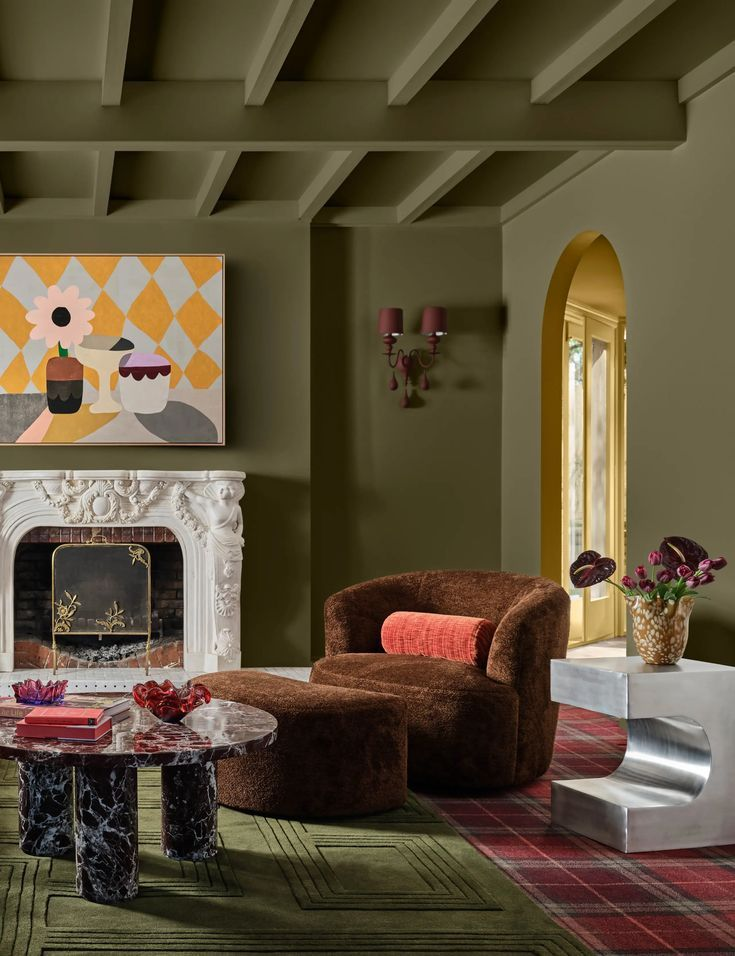
1. Color Drenching: The Infinite Mood
The Technique: You take one single shade—from your favorite moody forest green to a soft, sandy clay—and apply it to everything. This includes the walls, the baseboards, the window casings, the doors, and, most importantly, the ceiling.
Why it works:
By removing the “breaks” in a room (the white lines of the trim or the stark contrast of a bright ceiling), you trick the eye into seeing an infinite space. It blurs the corners of the room, making small spaces like powder rooms or dens feel expansive and incredibly high-end.
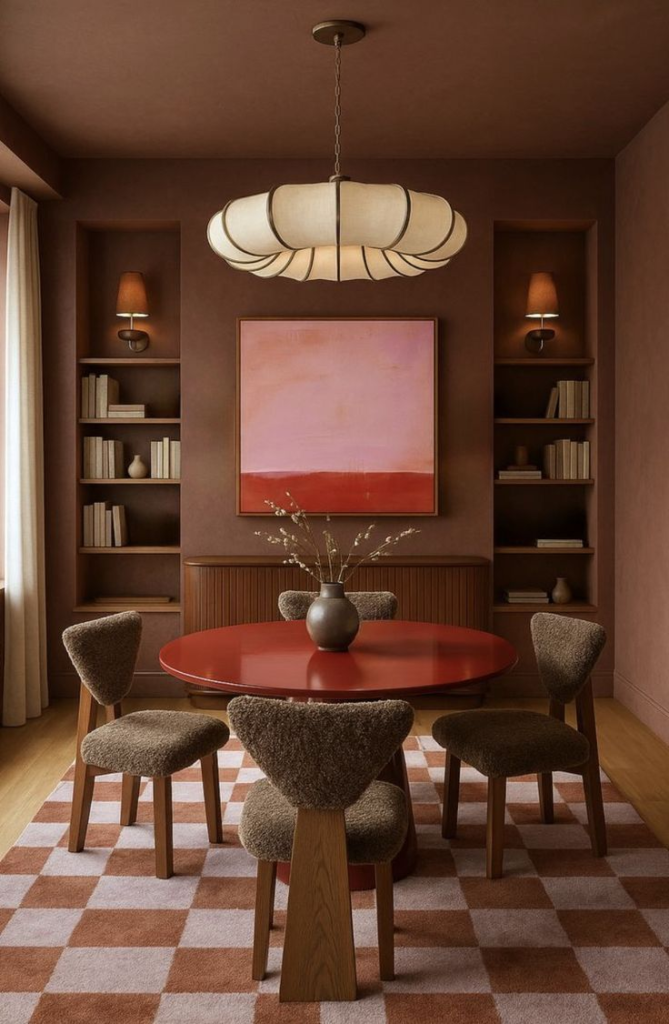
- Best for: Small, cozy rooms, libraries, or home theaters.
- The 2026 Vibe: Use “Tobacco Leather” or “Dusty Cedar” for a room that feels like a velvet-lined box.
- Pro Tip: Use different sheens of the same color to add subtle depth—satin on the trim and flat on the walls.
2. Color Capping: The “Fifth Wall” Focus
The Technique: You keep your walls a quiet, sophisticated neutral—think “Oatmeal,” “Bone,” or “Warm Greige”—but you go bold on the ceiling. You “cap” the room with a deep, saturated tone like “Midnight Blue,” “Burnt Terracotta,” or even a “Muted Plum.”
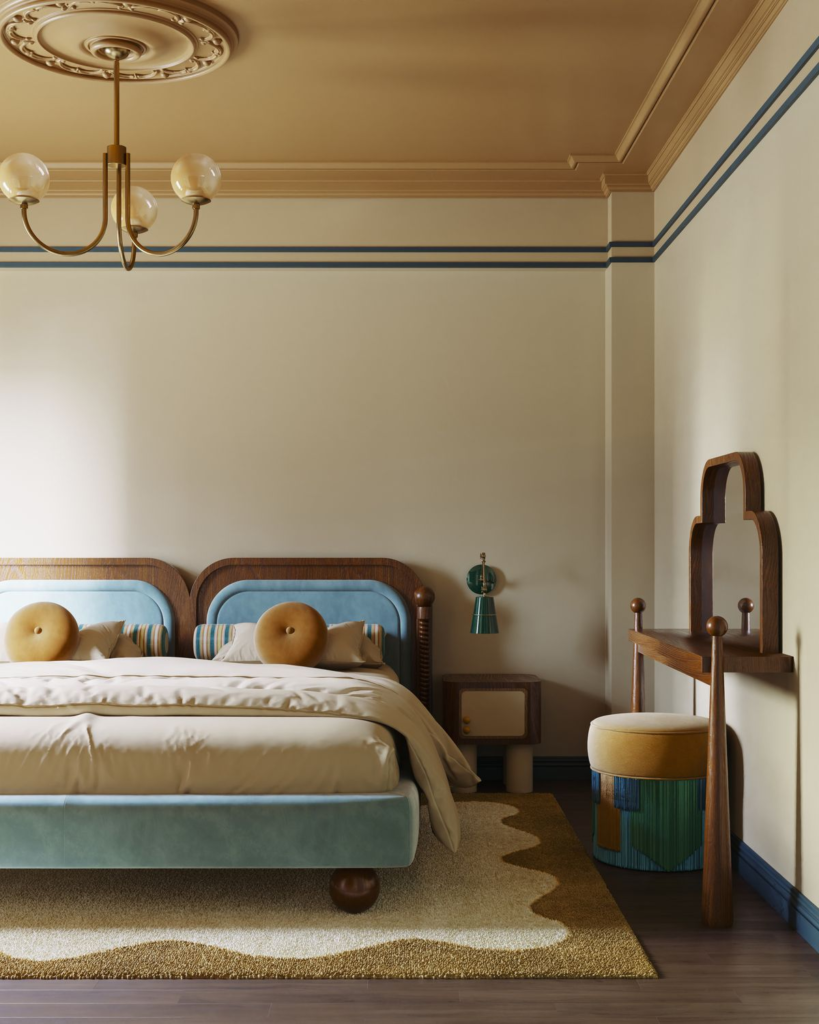
Why it works:
In 2026, we are treating the ceiling as the Fifth Wall. Color Capping “grounds” a room, bringing the height down slightly to create an immediate sense of intimacy and security. It feels like a warm hug from above while keeping the walls light and airy for your art and furniture to pop against.
- Best for: High-ceilinged living rooms, bedrooms, or dining areas where you want to encourage conversation.
- The 2026 Vibe: A soft “Parchment” wall paired with a “Deep Sage” ceiling.
- Pro Tip: Carry the ceiling color down about 2–4 inches onto the top of the wall to create a “crown” effect without the need for expensive molding.
Which One is Right for You?
| Feature | Choose Color Drenching If… | Choose Color Capping If… |
| Room Size | You want to make a tiny room feel larger and more intentional. | You have high ceilings and want to make the space feel less “cold.” |
| Lighting | You have limited natural light and want to embrace the moodiness. | You have lots of light and want to balance it with a dark “anchor.” |
| Furniture | You want your furniture to blend into a monochromatic dream. | You want your furniture to stand out against neutral walls. |
| Emotional Goal | You want to feel immersed in a single, powerful energy. | You want to feel grounded and cozy without losing brightness. |
The Verdict
Paint is no longer just a backdrop; it is an architectural tool. Whether you choose the seamless, modern immersion of Color Drenching or the cozy, grounded sophistication of Color Capping, you are moving beyond the basic and into the realm of professional-tier design.
For more guidance take a look at our gallery.